Made to feel timeless
Warm ivory, purposeful proportions, and unmistakably physical controls. Every detail is inspired by the optimism of personal electronics in the eighties — without pretending to be a lost historical product.
What if personal music had taken a different path in 1988? Meet CS-84: an imagined icon of the cassette era, re-engineered today with tactile controls, an elegantly simple display, and music at its heart.
An independent design and engineering project. Product imagery is conceptual; a finished physical prototype has not yet been built.
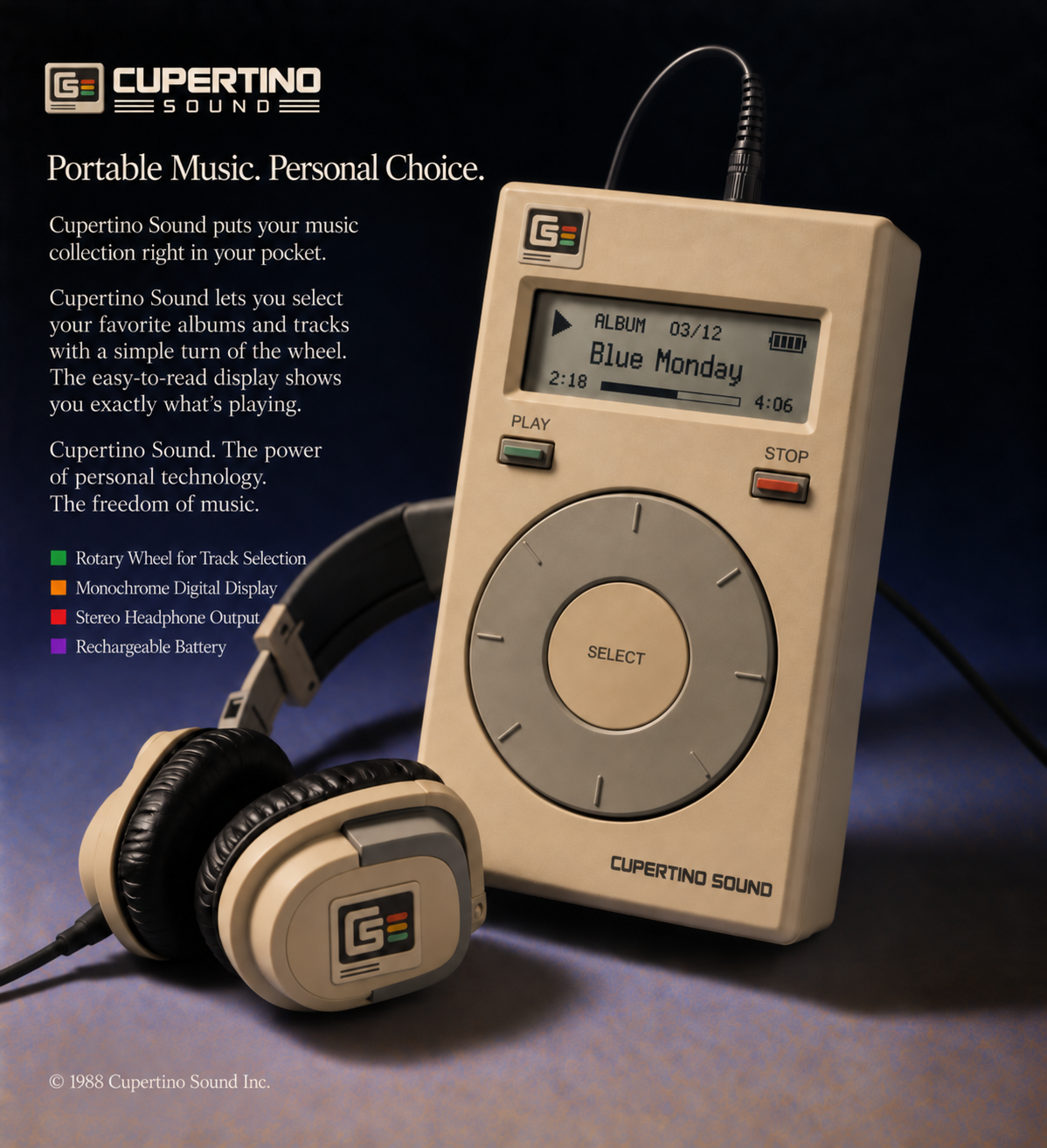
Born from a playful question — what might a personal music player have looked like in 1988? — CS-84 brings that alternate history to life through original industrial design, purpose-built software, and an evolving hardware prototype.
Warm ivory, purposeful proportions, and unmistakably physical controls. Every detail is inspired by the optimism of personal electronics in the eighties — without pretending to be a lost historical product.
Turn the substantial selection wheel. Press SELECT. Tap PLAY. CS-84 brings the joy of hands-on interaction back to listening.
A crisp monochrome interface makes albums, tracks and playback status easy to find. No feeds, no pop-ups — only your own music library.
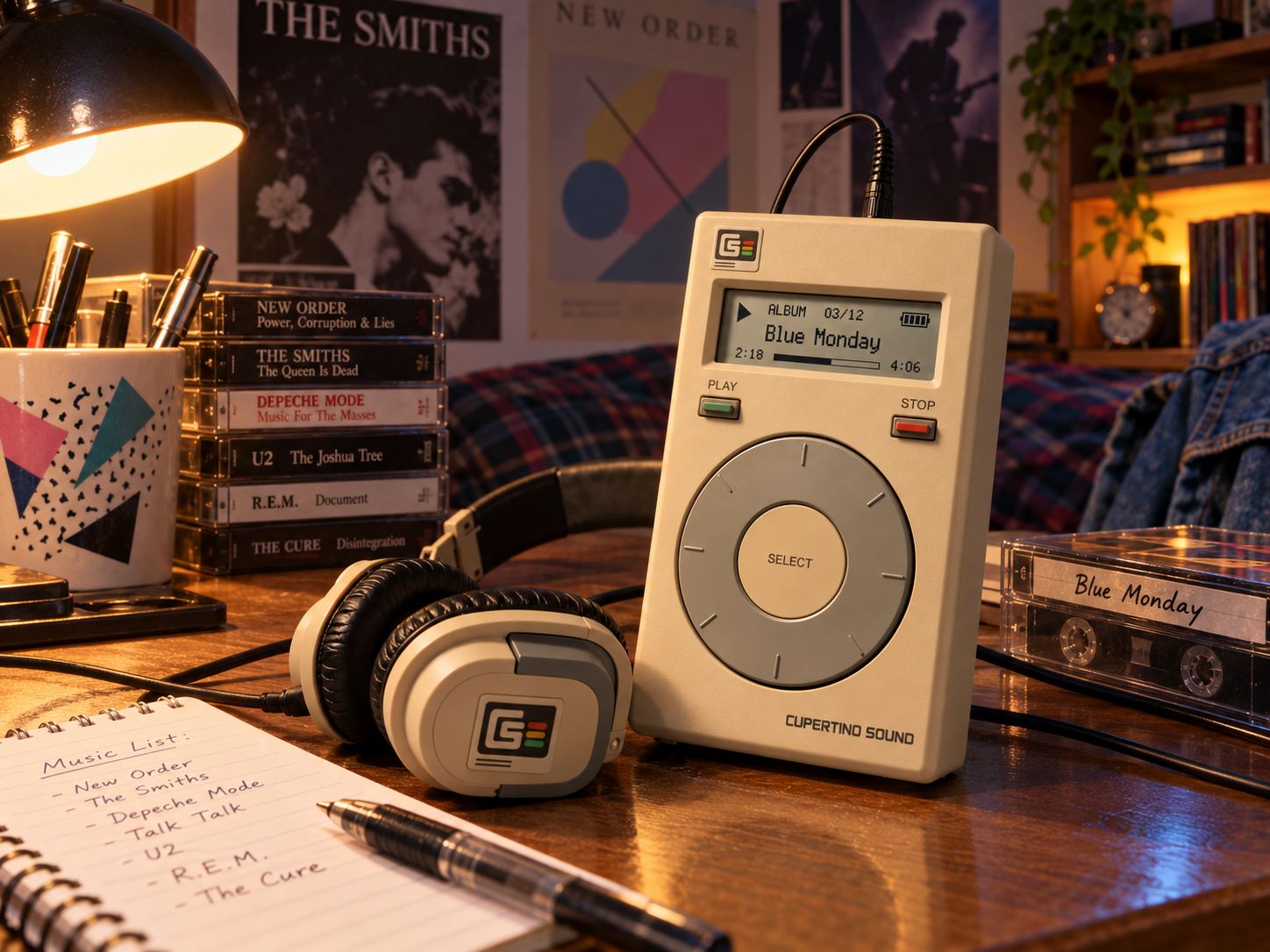
The experience is intentionally simple; the technology behind it is anything but vintage. Raspberry Pi hardware and custom CS-84 OS bring modern digital audio to an unmistakably retro design.
Engineering note: enclosure fit, wheel mechanics, battery safety and hardware integration remain under development.
The first chapter is digital: design, software and simulation. The next is physical — turning a striking idea into a working object you can hold.
The story, silhouette, controls and identity of CS-84 take shape.
Early CAD, CS-84 OS, a browser simulator and engineering records are prepared.
Refine the enclosure, selection wheel and power architecture, then print and assemble.
Test the sound, battery, controls and software on real hardware.
Step inside the CS-84 project: explore the interactive simulator, browse the engineering documents, and follow the path from concept to first prototype. These are development materials, not production-ready specifications.